
The decision of where to live carries profound implications for urban families. Beyond square footage and purchase price, homeownership choices influence how family members spend their time, connect with each other, and engage with their communities. For modern families navigating city living, understanding these ripple effects leads to decisions that support not just housing needs but overall quality of life.
The Commute Factor
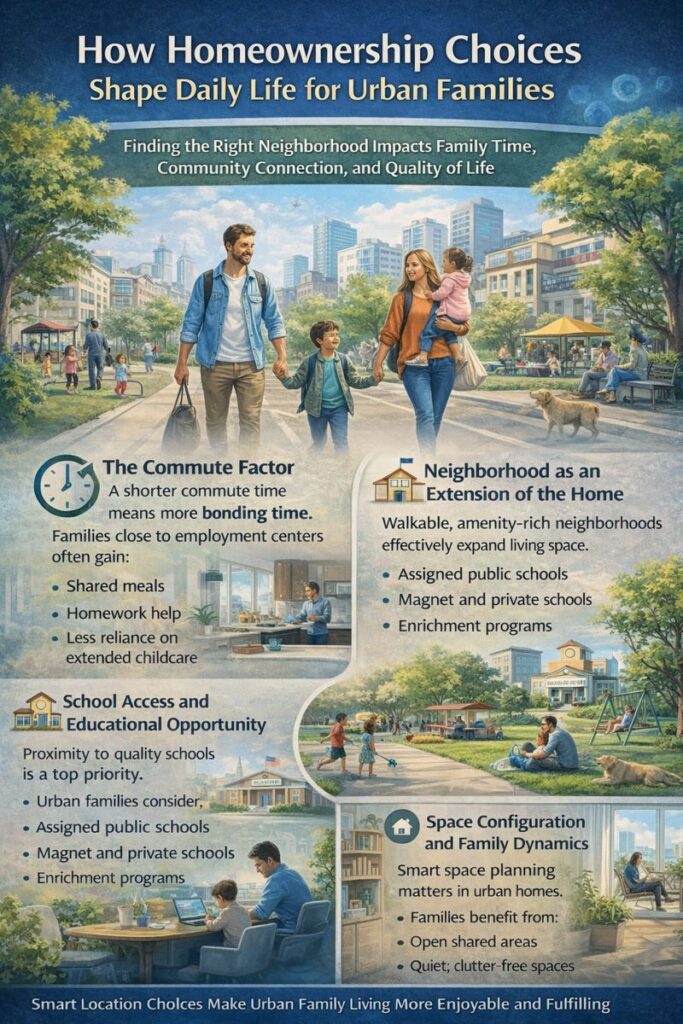
Perhaps no single factor shapes daily family experience more than commute dynamics. Where parents work relative to where families live determines how much time adults spend traveling versus being present at home. These hours add up dramatically over weeks, months, and years.
Families who prioritize proximity to workplaces often gain meaningful time together. Parents arrive home with energy remaining for homework help, family dinners, and evening activities. Children benefit from reduced reliance on extended childcare arrangements. The cumulative effect on family relationships can be substantial.
Urban families increasingly weigh commute considerations heavily when evaluating neighborhoods. A slightly smaller home closer to employment centers may deliver more family time than a larger property requiring lengthy daily travel. This calculation has shifted how many families define their ideal locations.
Neighborhood as Extended Living Space
Urban families typically occupy less private square footage than their suburban counterparts. This reality makes neighborhood characteristics function as extensions of the home itself. Parks become backyards. Local cafes serve as casual gathering spots. Community facilities supplement what individual homes cannot provide.
Families attuned to this dynamic evaluate neighborhoods as carefully as they evaluate properties. Walkable access to green spaces, playgrounds, libraries, and family-friendly amenities effectively expands living area without expanding mortgages. Children growing up in such neighborhoods often develop independence earlier, navigating familiar territory safely on foot or bicycle.
The social fabric of neighborhoods matters equally. Communities where families know their neighbors provide informal support networks that ease the challenges of urban parenting. Borrowed cups of sugar become shared childcare arrangements, borrowed tools become lasting friendships.
School Access and Educational Opportunities
For families with children, school quality and accessibility frequently drive location decisions above all other factors. Urban areas often feature significant variation in educational options across relatively short distances, making precise location choices consequential.
Beyond assigned public schools, urban families often consider proximity to magnet programs, private institutions, and enrichment opportunities that cities concentrate. A home positioned for reasonable access to multiple educational options provides flexibility as children’s needs evolve.
Real estate professionals serving urban families understand these priorities deeply. Specialists like Gurr Luxury Properties help clients evaluate how specific locations align with educational goals, neighborhood characteristics, and lifestyle preferences that shape daily family experience.
Space Configuration and Family Dynamics
How interior space is arranged affects how family members interact daily. Urban homes requiring creative use of limited square footage demand thoughtful consideration of layout and function.
Families benefit from spaces that support both togetherness and individual retreat. Open common areas encourage shared time while dedicated spaces for work, study, and quiet provide necessary separation. Storage solutions that minimize clutter help smaller spaces feel manageable rather than cramped.
Outdoor access, even in modest forms like balconies or small patios, provides breathing room that urban families particularly value. These transitional spaces between interior and exterior expand the functional living environment meaningfully.
Building a Life, Not Just Buying a Home
The most successful urban family homeownership decisions emerge from holistic thinking about daily life rather than narrow focus on property features alone. Families who consider how locations affect time, relationships, opportunities, and community connections make choices that serve their wellbeing comprehensively.
Every neighborhood and property involves tradeoffs. Understanding which factors matter most to your specific family clarifies which compromises make sense and which prove too costly to daily happiness. When homeownership choices align with family values and lifestyle needs, urban living becomes not just manageable but genuinely enriching for parents and children alike.