
West Michigan waterfront real estate can mean very different things, from a Lake Michigan bluff home near Holland to an inland-lake cottage, a riverfront retreat, or a house with shared beach access. Before focusing on the view, buyers should verify what they are actually purchasing, how they can use it, and what it may require to maintain over time.
For buyers comparing shoreline settings across Holland, Saugatuck, Douglas, Grand Haven, Spring Lake, and South Haven, Holland, MI real estate experts Michigan Homes & Cottages provides local property-search tools and buyer resources for West Michigan homes, cottages, and lake properties. Michigan Homes And Cottages focuses on communities along the lakeshore and inland-water areas, making its perspective useful when a buyer is weighing differences in access, lot conditions, and intended use.
Why Waterfront Homes Need A Different Checklist
A standard home purchase centers on the building, systems, lot, and neighborhood. A waterfront purchase also involves the edge of the property, the water itself, legal access, drainage, and improvements between the house and shoreline. A modest cottage with private frontage may need more ongoing attention than a larger home with community access and no direct shoreline responsibility.
Think about enjoyment, risk, rights, and long-term cost together. A beautiful deck or staircase means little if it is unsafe, difficult to insure, or located on land with unresolved stability concerns.
Compare The Waterfront Setting
Lake Michigan Frontage
Lake Michigan properties can offer expansive views, beaches, and dramatic sunsets, but wind, wave action, changing water conditions, and bluff terrain deserve careful review. Ask whether the home sits near a slope, how runoff is managed, and whether stairways or shoreline protection have required repairs.
Inland Lakes And Rivers
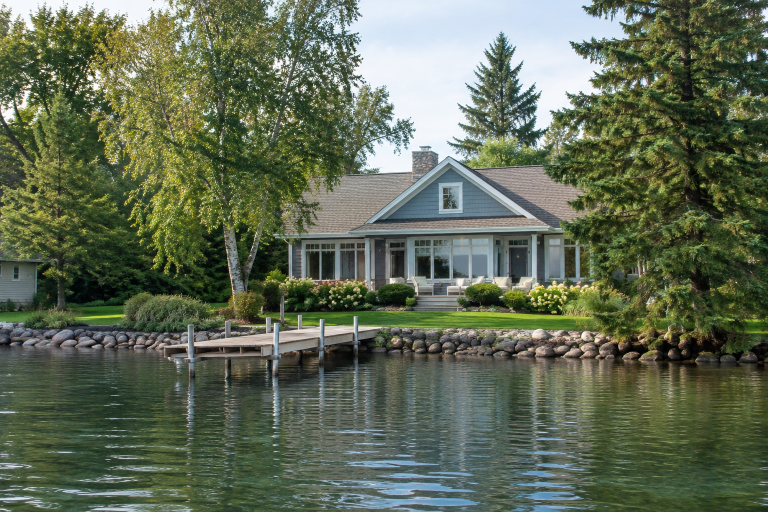
Inland-lake homes may offer calmer conditions for swimming, fishing, kayaking, or boating, yet each lake has its own depth, vegetation, boating activity, and association rules. Riverfront parcels can involve current, seasonal water-level changes, wetlands, and flood considerations. A water view alone may provide none of the rights associated with frontage.
Shared Access And Water Views
Shared beaches and deeded access can be appealing alternatives to direct frontage, particularly for buyers who want water recreation without shoreline maintenance. Still, review the documents closely. Access may be limited by an easement, association rules, parking restrictions, or rules for docks and watercraft.
Confirm What “Waterfront” Includes
Do not rely on listing language alone. Review the legal description, current survey, title commitment, recorded easements, and any covenants or association bylaws. Confirm whether the parcel physically reaches the water and whether the frontage is private, shared, or subject to another party’s rights.
Ask specifically whether the dock, boat lift, stairs, beach area, storage space, and parking transfer with the sale. If the boundary or access language is unclear, consult a qualified real estate attorney before removing contingencies.
Inspect The Shoreline, Dock, And Drainage
Walk the full shoreline rather than relying on the portion visible from the home. Look for exposed roots, leaning trees, soil loss, cracked retaining walls, damaged stairs, pooling water, and drainage that appears to flow toward a bluff or the lake. Request records for repairs, engineering evaluations, permits, and past insurance claims when available.
For Great Lakes properties, buyers should review Michigan’s high-risk erosion area guidance before assuming that a new deck, staircase, addition, or shoreline project will be allowed. Existing seawalls, riprap, grading, and docks should be evaluated for condition and ownership. Their presence does not by itself confirm that they meet current requirements.
Check Water, Wells, And Septic Systems
Determine whether the home has municipal water and sewer, a private well, or a septic system. For private systems, request available permits, well records, septic pumping receipts, repair history, and inspection reports. Include a septic inspection when the property’s system, age, use pattern, or records warrant one.
Slow drains, wet ground, odors, or unusual vegetation near a drain field may justify further evaluation by a qualified professional. Buyers of inland-lake homes can also use Michigan’s inland lakes monitoring information as one source of broader context about lake conditions. It does not replace a property-level inspection or water test.
Plan For Insurance, Taxes, And Seasonal Costs
Request insurance estimates before making an offer, not after inspections are complete. Ask insurers about flood coverage, wind and water damage, water backup, dock coverage, and exclusions affecting shoreline structures. Flood insurance availability and requirements can differ from a standard homeowners policy.
Also estimate ownership costs beyond the seller’s current tax bill. A waterfront budget may include private-road maintenance, association dues, dock removal or storage, snow clearing, septic pumping, well service, winterization, and future shoreline or stair repairs. A seasonal cottage and a year-round primary residence can have very different operating needs.
Visit In More Than One Condition
Whenever possible, visit on a weekday and a busy weekend. Observe boat traffic, public activity, parking, road noise, and the amount of privacy at the shoreline. Ask how the driveway, private road, stairs, and waterfront perform after heavy rain, during spring runoff, in high winds, and through winter.
Local conditions vary considerably between Holland, Lake Macatawa, Spring Lake, Grand Haven, Muskegon, Saugatuck, Douglas, and South Haven. Use local knowledge to frame questions, but verify every important answer through records, inspections, and written documents.
Pre-Offer Waterfront Checklist
- Define whether the home will be a primary residence, seasonal cottage, rental, or occasional retreat.
- Confirm the exact frontage, access rights, easements, and shared-use obligations.
- Review the survey, title commitment, association documents, and permits.
- Inspect shoreline features, drainage, stairs, docks, seawalls, and retaining walls.
- Check well, septic, and water-system records.
- Get insurance pricing and estimate taxes after purchase.
- Use inspection and document-review contingencies suited to the property.
Common Waterfront Buyer Questions
Does Waterfront Always Mean Private Beach Access?
No. It can mean direct private frontage, shared frontage, deeded access, an easement, nearby public access, or only a view. The recorded documents should define the rights that transfer.
Are Inland-Lake Homes Easier To Maintain?
Not necessarily. They may avoid some Lake Michigan exposure, but can still require dock upkeep, septic care, weed management, private-road contributions, association dues, and shoreline maintenance.
What Is The Most Important Inspection?
A general home inspection is a starting point. Depending on the property, a buyer may also need septic, well, drainage, shoreline, dock, seawall, structural, or geotechnical expertise.
Make The View Part Of The Decision, Not The Whole Decision
The best West Michigan waterfront home is not automatically the one with the largest view or lowest asking price. It is the property whose access, condition, maintenance demands, and ownership rights fit the buyer’s lifestyle and budget. Careful due diligence before closing can help protect both the enjoyment of the water and the long-term value of the purchase.